
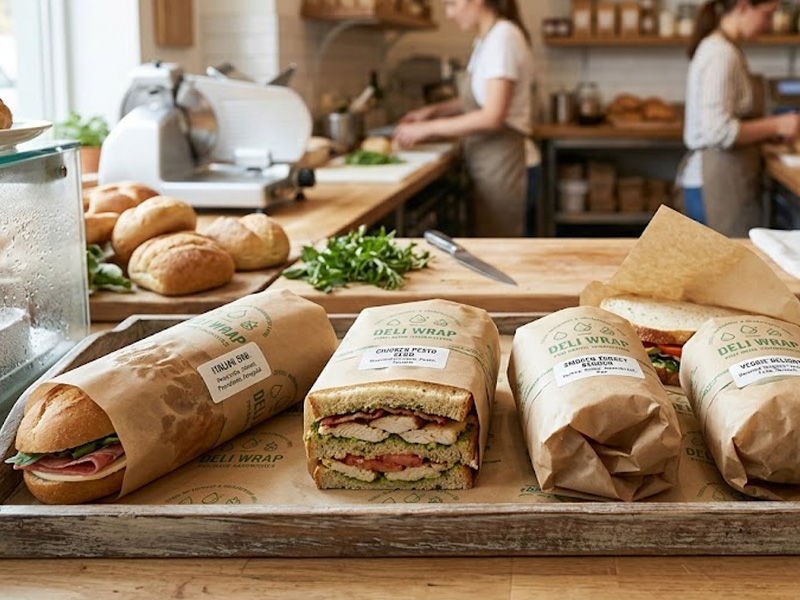
What Is Greaseproof Paper​ Packaging?
What Is Greaseproof Paper Packaging?
Greaseproof Paper packaging is a type of paper-based packaging designed to help prevent oils and fats from penetrating through the paper. It is widely used for food wrapping, bakery products, takeaway meals, catering applications, snacks, and other products that may contain grease or oil. By combining a suitable paper structure with grease-resistant properties, greaseproof paper packaging can provide a practical solution for a wide range of food packaging applications.
But what exactly is greaseproof paper packaging, how does it work, and what should businesses consider when choosing it? Understanding the material, packaging formats, applications, and performance requirements can help buyers select the right greaseproof paper for food packaging.
What Is Greaseproof Paper Packaging?
Greaseproof paper packaging refers to packaging products made from paper that has been designed to resist the penetration of oil and grease. Unlike ordinary paper, which can absorb oils and become stained or weakened, greaseproof paper has a dense fiber structure and controlled surface properties that help reduce grease penetration.
The term can describe both the paper material itself and finished packaging products made from that material. Depending on the application, greaseproof paper can be supplied as sheets, rolls, wrappers, liners, bags, pouches, and other converted packaging formats.
Because of its grease-resistant properties, greaseproof paper is commonly used as Food Packaging Paper for products such as burgers, sandwiches, pastries, baked goods, fried foods, snacks, and confectionery.
How Does Greaseproof Paper Work in Food Packaging?
The main purpose of greaseproof paper is to reduce the movement of oil and grease through the paper structure. Ordinary paper contains microscopic spaces between cellulose fibers. When oily food comes into contact with the surface, oil can move through these spaces and gradually penetrate the sheet.
Greaseproof paper is manufactured with a denser and more controlled fiber structure. This reduces the pathways available for grease to migrate through the material and provides improved resistance compared with conventional paper.
Depending on the required performance, some paper packaging products may also use additional surface treatments or coatings. These technologies can provide additional barrier properties, such as improved resistance to water or moisture, when required by the application.
This means that the performance of grease resistant paper depends on several factors, including fiber structure, paper density, basis weight, surface properties, and any additional coating or treatment.
What Types of Food Can Be Packaged With Greaseproof Paper?
Greaseproof paper is particularly useful for foods containing oils, fats, or sauces. It can help keep grease from transferring through the packaging and can also help maintain a cleaner appearance during handling.
Common applications of greaseproof food packaging include:
Burgers and sandwiches
French fries and fried foods
Bakery and pastry products
Cakes and confectionery
Cookies and biscuits
Snacks and takeaway foods
Prepared meals
Food tray liners
The appropriate paper grade depends on the food product and the packaging conditions. For example, a dry bakery product may have different requirements from a hot fried food product containing both oil and moisture.
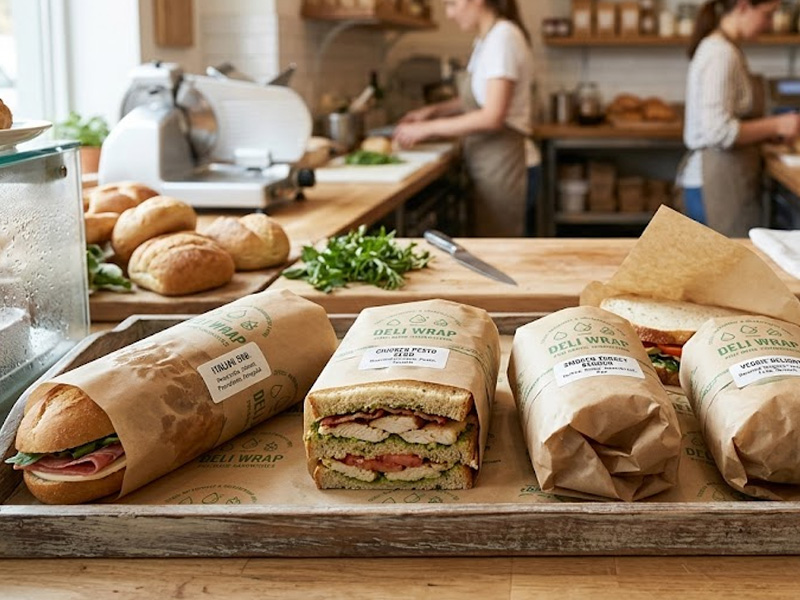
What Are Common Greaseproof Paper Packaging Formats?
Greaseproof paper can be converted into different packaging formats depending on the needs of the food manufacturer, restaurant, catering company, or packaging converter.
Greaseproof Paper Sheets
Greaseproof paper sheets are commonly used as food wrappers, tray liners, separators, and interleaving sheets. They can be supplied in different sizes and basis weights according to the application.
Greaseproof Paper Rolls
Rolls provide flexibility for manufacturers and converters that need to process paper through automated packaging or converting equipment. Roll width, thickness, and other specifications can be customized according to production requirements.
Greaseproof Paper Bags
Greaseproof paper bags can be used for takeaway foods, bakery products, snacks, and other food items. The paper helps provide resistance to grease while maintaining a paper-based packaging structure.
Greaseproof Paper Wrapping
Greaseproof paper wrapping is commonly used for burgers, sandwiches, pastries, and other prepared foods. The paper can be wrapped directly around the food or used as an inner layer within a larger packaging structure.
Greaseproof Paper Pouches and Liners
Depending on the material structure and converting process, grease-resistant paper can also be used to produce pouches, liners, and other specialty packaging formats.
What Is Catering Greaseproof Paper Used For?
Catering greaseproof paper is commonly used in restaurants, cafés, takeaway businesses, catering operations, and food-service environments where prepared foods need to be wrapped, lined, or packaged.
Typical applications include food baskets, takeaway trays, sandwich wrapping, burger packaging, bakery serving, and food liners.
For catering applications, the paper may need to provide a balance between grease resistance, strength, flexibility, appearance, and ease of converting. If the food is hot or contains significant moisture, additional performance requirements may also need to be considered.
Is Biodegradable Greaseproof Paper Available?
Biodegradable greaseproof paper is an option for businesses looking for paper-based packaging materials with specific end-of-life considerations. However, whether a greaseproof paper product is biodegradable depends on the complete material structure, including the base paper and any coatings, treatments, inks, or other components used in the final packaging.
When evaluating biodegradable paper packaging, buyers should therefore consider the complete packaging construction rather than looking only at the base paper. The intended disposal environment and applicable local requirements can also influence how a packaging material should be evaluated.
For businesses developing paper-based food packaging, it can be useful to discuss the required grease resistance and other barrier properties with a paper manufacturer or supplier before selecting a specific material.
What Are the Benefits of Greaseproof Paper Packaging?
Greaseproof paper packaging offers several useful characteristics for food packaging applications.
Grease Resistance
The primary advantage is resistance to oils and fats. This helps reduce grease penetration and can improve the appearance and handling of packaged food.
Suitable for Different Food Applications
Greaseproof paper can be used for a wide range of bakery, takeaway, catering, snack, and food-service applications.
Flexible Packaging Formats
The material can be supplied as sheets and rolls and converted into wrappers, bags, liners, pouches, and other packaging formats.
Printing and Customization
Depending on the paper grade and printing process, greaseproof paper packaging can be customized with different sizes, designs, and printed graphics for branded food packaging.
Compatibility With Paper-Based Packaging Designs
Greaseproof paper can be incorporated into different paper packaging structures depending on the required barrier performance, converting method, and end-use conditions.
How to Choose Greaseproof Paper for Food Packaging?
Choosing the right greaseproof paper for food packaging requires more than simply looking for a material labeled as greaseproof. The paper should be evaluated according to the specific food product and packaging process.
1. Consider the Level of Grease Resistance
Different foods contain different amounts of oil and fat. Products such as fried foods may require a higher level of grease resistance than relatively dry bakery products.
2. Check Water and Moisture Resistance
Grease resistance does not automatically mean that a paper provides the same level of water resistance. If the packaged food contains moisture, condensation, sauces, or liquids, additional barrier properties may be required.
3. Consider Heat Conditions
Hot food packaging may require paper that can maintain its intended performance under elevated temperatures. The expected temperature and contact conditions should therefore be considered when selecting the paper grade.
4. Evaluate Basis Weight and Strength
Paper thickness, basis weight, stiffness, tensile strength, and folding performance can affect the packaging's durability and converting performance.
5. Consider Printing and Converting Requirements
If the paper will be printed, cut, folded, sealed, or converted into bags and pouches, the selected grade should be compatible with the intended production process.
Greaseproof Paper Packaging vs. Regular Paper Packaging
The main difference between greaseproof paper packaging and conventional paper packaging is the material's ability to resist oil and grease penetration.
Regular paper may absorb oils quickly when used with greasy foods. This can lead to staining, reduced strength, and a less suitable packaging surface.
Greaseproof paper is designed to provide improved grease resistance through its paper structure and, where applicable, additional surface treatment. This makes it more suitable for applications where direct contact with oily or fatty foods is expected.
However, grease resistance should not be confused with complete water or moisture resistance. Different applications may require different combinations of barrier properties.
How to Choose a greaseproof paper manufacturer or Supplier?
When purchasing greaseproof paper for commercial food packaging, buyers should consider more than the paper's basic grease-resistant performance. A suitable greaseproof paper manufacturer or greaseproof paper supplier should be able to provide clear information about the material structure, basis weight, barrier properties, available formats, and converting capabilities.
It is also useful to discuss the actual application with the supplier. Information such as food type, temperature, oil content, moisture level, packaging format, printing requirements, and production method can help determine the appropriate paper specification.
Frequently Asked Questions About Greaseproof Paper Packaging
Is greaseproof paper suitable for food packaging?
Yes. Greaseproof paper is widely used for food wrapping, bakery packaging, takeaway food, catering applications, liners, and other packaging applications where resistance to oil and grease is required.
Is greaseproof paper the same as regular food packaging paper?
No. Greaseproof paper is specifically designed to provide resistance to oil and grease, while conventional food packaging paper may not provide the same level of grease resistance.
Is greaseproof paper biodegradable?
Some greaseproof paper products may be designed with biodegradable paper structures, but the biodegradability of the finished packaging depends on the complete material construction, including coatings and other components.
Can greaseproof paper be used for hot food?
Some greaseproof paper grades can be used for hot food applications. However, the appropriate grade should be selected according to the expected temperature, food characteristics, and required barrier performance.
Can greaseproof paper be used for bakery packaging?
Yes. Greaseproof paper is commonly used for bakery and pastry packaging because it can help resist oils and fats from products such as pastries, cakes, cookies, and other baked foods.
Conclusion
Greaseproof paper packaging is designed to provide resistance to oils and fats while maintaining the flexibility and converting characteristics of paper-based packaging. It can be supplied in different forms, including sheets, rolls, wrappers, bags, liners, and pouches, making it suitable for a wide range of food packaging applications.
When choosing greaseproof paper for food packaging, businesses should consider grease resistance, water and moisture resistance, heat performance, paper strength, basis weight, printing, and converting requirements. For commercial applications, working with an experienced greaseproof paper manufacturer or greaseproof paper supplier can also help identify a paper specification that matches the intended packaging process and end use.
```