Are High Barrier Papers Suitable for Food Packaging?
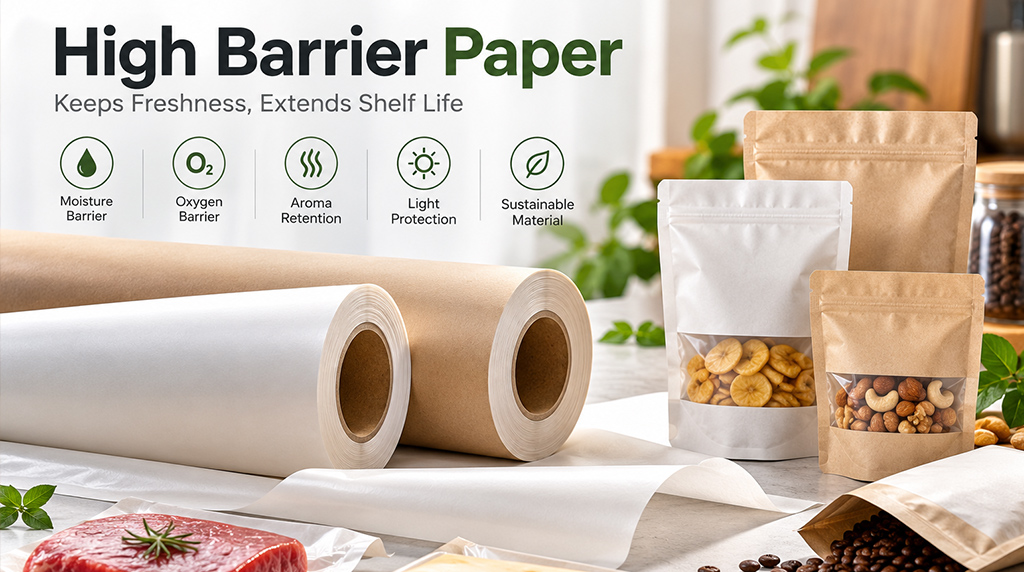
Yes, High Barrier Papers can be suitable for food packaging when they are specifically designed and qualified for the intended application. High Barrier Paper combines a paper substrate with functional barrier technology to improve resistance to oxygen, moisture, grease, oil, and other factors that can affect food quality. This makes High Barrier Paper packaging an option for selected food products, including dry foods, snacks, coffee, tea, and other packaged goods.
However, food packaging has more demanding requirements than ordinary paper packaging. The material must protect the product, maintain the required shelf life, work with the filling and sealing process, and meet applicable food-contact requirements. Therefore, the suitability of a high barrier paper should always be evaluated according to the specific food product and packaging conditions.
What Is High Barrier Paper for Food Packaging?
High barrier paper is a paper-based packaging material engineered to provide enhanced protection against substances that can pass through conventional paper. Ordinary paper has a porous fiber structure, which means gases and moisture can move through it relatively easily.
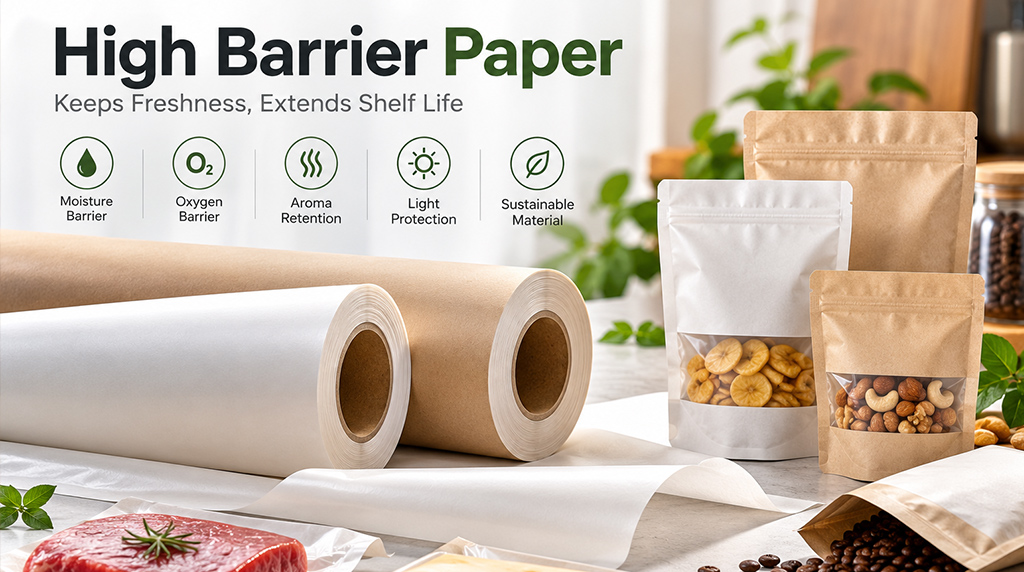
A high barrier structure uses a functional coating or additional barrier layer to reduce this transmission. Depending on the material design, the resulting barrier paper may provide oxygen barrier, moisture barrier, grease resistance, oil resistance, aroma protection, or a combination of these properties.
For food packaging, these properties are important because exposure to oxygen and moisture can influence food quality, texture, flavor, freshness, and shelf life.
Why Is Barrier Performance Important for Food Packaging?
Food products can be sensitive to environmental conditions. Oxygen can accelerate oxidation, while moisture can change the texture of dry foods or encourage unwanted deterioration. Oils and fats can also interact with packaging materials.
This is why food packaging needs to do more than simply contain the product. The package must create an appropriate barrier between the food and its surrounding environment.
High barrier packaging can help control the movement of oxygen and water vapor through the packaging structure. The required level of protection varies significantly between different food products.
Can High Barrier Paper Be Used for Dry Food?
Yes. Dry foods are among the applications that may be suitable for high barrier paper packaging. Products such as dry snacks, powdered foods, grains, cereals, and other low-moisture products may require protection from humidity to maintain their original texture and quality.
In these applications, moisture barrier performance is particularly important. The packaging material should be evaluated according to the product's moisture sensitivity and expected storage conditions.
Can High Barrier Paper Be Used for Coffee Packaging?
High barrier paper can be considered for selected coffee packaging applications. Coffee can be sensitive to oxygen, moisture, aroma loss, and other environmental factors.
A suitable high barrier paper packaging structure can be designed to provide the required level of oxygen and moisture protection while maintaining a paper-based packaging format.
However, coffee packaging requirements vary depending on the coffee type, roasting process, packaging format, filling method, storage conditions, and expected shelf life. The complete package should therefore be tested before commercial use.
Can High Barrier Paper Be Used for Snack Packaging?
Yes, selected snack products can use high barrier paper packaging. Snacks may require protection from moisture, oxygen, and grease. A suitable barrier structure can help maintain product texture and reduce exposure to external environmental conditions.
For oily or fried snacks, grease resistance is particularly important. The paper substrate must prevent oil from penetrating through the packaging or negatively affecting the package's appearance and performance.
Is High Barrier Paper Suitable for Oily Foods?
Some high barrier papers are designed to provide oil and grease resistance, making them suitable for certain oily food applications. However, not every barrier paper has the same grease resistance.
Food manufacturers should consider the type and concentration of oil, contact time, temperature, and packaging structure when selecting a material. A paper designed primarily for moisture protection may not provide sufficient resistance to grease.
What Food Packaging Properties Should High Barrier Paper Have?
The required properties depend on the food product, but several characteristics are commonly considered when evaluating high barrier paper packaging:
Oxygen barrier: Helps reduce oxygen transmission through the packaging.
Moisture barrier: Helps protect moisture-sensitive products.
Grease resistance: Helps prevent oil and fats from penetrating the paper.
Heat sealability: Allows the material to form sealed packaging when the structure is designed for heat sealing.
Mechanical strength: Helps the package withstand filling, handling, transportation, and storage.
Printability: Allows packaging graphics and product information to be applied.
Food-contact suitability: The complete material structure must meet the applicable requirements for its intended use.
What Are OTR and WVTR in Food Packaging?
OTR and WVTR are two important measurements when evaluating barrier packaging materials.
OTR stands for Oxygen Transmission Rate. It describes how much oxygen passes through a packaging material under specified test conditions. A lower OTR generally indicates stronger oxygen barrier performance.
WVTR stands for Water Vapor Transmission Rate. It measures the transmission of water vapor through a packaging material under specified conditions. A lower WVTR generally indicates stronger moisture barrier performance.
These measurements can help packaging engineers compare materials, but the appropriate target depends on the food product and expected shelf life.
Are High Barrier Papers Heat Sealable?
Some high barrier papers are designed with heat-sealable coatings or layers. This allows them to be converted into bags, pouches, sachets, and other sealed packaging formats using suitable equipment.
However, heat sealability is not an automatic characteristic of every barrier paper. Seal temperature, pressure, dwell time, coating structure, and machine settings can all affect sealing performance.
Are High Barrier Papers Safe for Food Packaging?
Some high barrier papers are specifically developed for food packaging, but the term "high barrier paper" alone does not guarantee food-contact suitability.
Food packaging materials need to be evaluated according to the intended food type, contact conditions, temperature, duration of contact, and applicable regulatory requirements. This is particularly important when coatings, adhesives, inks, or additional barrier layers are included in the packaging structure.
For this reason, food manufacturers should request appropriate technical and compliance documentation for the specific high barrier paper being considered.
Are High Barrier Papers Recyclable?
The recyclability of high barrier paper depends on its complete construction rather than simply the presence of a paper substrate. Some barrier coatings and multilayer structures can affect how a package behaves in a particular recycling system.
When recyclability is an important requirement, packaging developers should evaluate the complete structure, including the paper, coating, adhesive, ink, and any additional functional layers.
What Foods Are Suitable for High Barrier Paper Packaging?
Potential applications include a range of dry and semi-dry food products, depending on the barrier requirements. Examples may include:
Coffee and tea
Dry snacks
Cereal and grains
Powdered food products
Bakery products
Confectionery products
Selected pet food products
Other packaged foods requiring moisture, oxygen, or grease protection
The list should not be interpreted as a universal application range. Each product has different barrier and food-contact requirements.
How Should You Choose High Barrier Paper for Food Packaging?
The first step is to understand the food product itself. Consider its moisture content, fat content, sensitivity to oxygen, aroma characteristics, expected shelf life, and storage conditions.
Next, determine the required packaging properties. For example, a dry snack may require strong moisture and grease resistance, while coffee may place greater emphasis on oxygen and aroma protection.
The packaging process should also be considered. If the material needs to be converted into a pouch or bag, heat sealability, coefficient of friction, stiffness, tensile strength, and machine compatibility can influence the final result.
High Barrier Paper vs. Conventional Paper
Conventional paper provides a useful combination of printability, stiffness, and paper-based appearance, but it does not naturally provide the same level of moisture, oxygen, or grease protection required by many food products.
Barrier paper adds functional protection to the paper structure. High barrier grades are designed for applications where ordinary paper does not provide sufficient protection.
This distinction is important when choosing packaging materials. The right question is not simply whether the package is made from paper, but whether the complete packaging structure provides the required performance for the product.
Conclusion
High barrier papers can be suitable for food packaging when their barrier performance, food-contact properties, converting characteristics, and end-of-life requirements match the application. They can provide protection against oxygen, moisture, oil, grease, and other external factors while maintaining a paper-based packaging structure.
However, there is no single high barrier paper that is suitable for every food product. Coffee, snacks, dry foods, oily foods, and other products can have very different packaging requirements. Selecting the right high barrier paper packaging therefore requires consideration of the product, shelf life, barrier requirements, sealing process, storage conditions, and applicable regulations.
Frequently Asked Questions
Are high barrier papers suitable for food packaging?
Yes, some high barrier papers are specifically designed for food packaging. Their suitability depends on the material construction, food-contact requirements, barrier performance, and intended application.
Can high barrier paper be used for coffee?
Yes, selected high barrier paper structures can be used for coffee packaging when they provide the required oxygen, moisture, and aroma protection.
Can high barrier paper prevent grease from passing through?
Some grades provide grease and oil resistance. The actual performance depends on the barrier coating and complete packaging structure.
What is the most important barrier property for food packaging?
There is no single property that is most important for every food. Oxygen barrier, moisture barrier, grease resistance, and other properties should be selected according to the specific product and shelf-life requirements.