
Is Greaseproof Paper The Same As Butter Paper?
Greaseproof Paper and butter paper are often used for food wrapping, baking preparation, and food storage. Although the two terms may refer to similar products in some markets, they are not always exactly the same. Their properties depend on the paper grade, manufacturing process, surface treatment, and intended application. Understanding these differences helps food businesses and home users choose the right paper for handling oily foods, wrapping butter, and preparing baked goods.
greaseproof paper is specifically designed to resist the penetration of grease and oil. Butter paper is a less standardized term that may describe paper used to wrap butter or other foods. In some regions, it refers to grease-resistant paper, while in others, it may describe a different type of food-contact paper. Therefore, buyers should check the product specifications instead of relying on the name alone.
What Is Greaseproof Paper?
Greaseproof paper is a type of paper manufactured to resist the penetration of fats and oils. Its grease resistance is commonly achieved through controlled refining of the paper fibers, which creates a dense structure that limits the movement of grease through the sheet. Depending on the product, additional treatments or coatings may also be used.
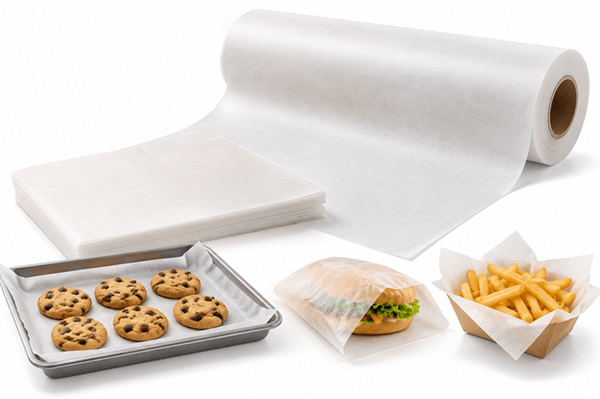
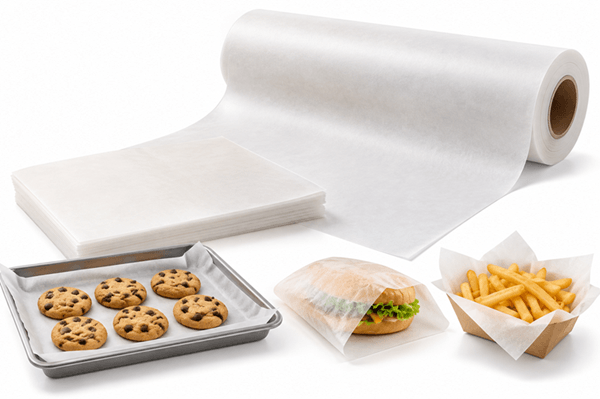
This paper is widely used in food packaging because it helps prevent oil from passing through the material and staining surrounding surfaces. Typical applications include wrapping sandwiches, burgers, pastries, baked goods, and other foods containing fats or oils.
Greaseproof paper is available in sheets and rolls, with different weights, sizes, colors, and printing options. Food businesses can select a suitable grade according to the food type, packaging design, and expected contact conditions.
What Is Butter Paper?
Butter paper is a general term used in different markets for paper intended for wrapping butter and other food products. The term does not always identify one consistent material specification. Some products marketed as butter paper are grease-resistant, while others may be designed primarily for wrapping or separating food items.
For example, a paper used to wrap a block of butter may need to resist oil migration and maintain its integrity during refrigerated storage. A paper used to separate portions of butter or other fatty foods may require different release properties and moisture resistance.
Because the name varies by region and supplier, it is important to confirm whether the product is greaseproof paper, coated food wrapping paper, parchment paper, or another food-contact material.
What Is the Difference Between Greaseproof Paper and Butter Paper?
The main difference is that greaseproof paper describes a material by its resistance to grease, whereas butter paper is a common-use name that can refer to different papers depending on the market.
| Feature | Greaseproof Paper | Butter Paper |
|---|---|---|
| Main purpose | Resisting oil and grease penetration | Wrapping or handling butter and other foods |
| Material definition | Describes a functional paper property | Common name that varies by region |
| Grease resistance | Designed to provide grease resistance | Depends on the specific product |
| Baking suitability | Depends on the grade and temperature rating | Must be confirmed with the supplier |
| Food contact | Must meet applicable food-contact requirements | Must meet applicable food-contact requirements |
| Common formats | Sheets, rolls, and printed wrapping paper | Wrapping sheets, liners, or specialty formats |
These descriptions are general rather than universal. A product sold as butter paper may perform similarly to greaseproof paper if it has the appropriate grease resistance and food-contact properties.
Can You Use Greaseproof Paper Instead of Butter Paper?
In many food-wrapping applications, greaseproof paper can replace butter paper when the materials have suitable performance characteristics. For example, both may be suitable for wrapping butter portions, separating fatty food items, or lining food packaging where grease migration is a concern.
However, substitution should depend on the intended use rather than the product name. If the paper is used for refrigerated food storage, check its suitability for the expected temperature and moisture conditions. If it is used for hot food, confirm that its temperature rating and any coating are appropriate.
Grease resistance alone does not guarantee that a paper is non-stick, waterproof, or suitable for direct oven use. These properties should be assessed separately.
Is Greaseproof Paper the Same as Parchment Paper?
No. Greaseproof paper and parchment paper have different performance characteristics, although some applications overlap.
Greaseproof paper is primarily intended to resist the penetration of oils and fats. Parchment paper is commonly treated or manufactured to provide a non-stick surface and resistance to heat under specified baking conditions. It is widely used to line baking trays and prevent food from sticking during cooking.
Greaseproof paper should not automatically be used as a substitute for parchment paper in an oven. Some greaseproof papers are not designed to withstand baking temperatures, and their surfaces may not provide the release properties needed for sticky foods.
For professional bakeries, restaurants, and food manufacturers, choosing the correct material can help improve product presentation, reduce packaging failures, and maintain consistent food preparation processes.
How Is Greaseproof Paper Used in Food Packaging?
Greaseproof paper is used in a variety of food packaging applications because it helps contain oily residues and keeps packaging cleaner. Restaurants may use it to wrap burgers and sandwiches, while bakeries may use it for pastries, cookies, and other baked products.
Businesses that purchase bulk greaseproof paper should consider paper weight, sheet dimensions, grease resistance, print quality, and packaging requirements. Wholesale greaseproof paper may be supplied in rolls or precut sheets to support different production workflows.
A greaseproof paper distributor can help buyers identify products suitable for local food-service requirements, while a greaseproof paper exporter may supply customized grades and packaging formats to overseas markets. A reliable greaseproof paper packaging supplier should also be able to provide relevant technical specifications and food-contact documentation.
For operations that use continuous packaging lines, working with a greaseproof paper roll supplier can help ensure consistent roll width, paper thickness, winding quality, and compatibility with converting or wrapping equipment. A food wrapping paper supplier should be able to clarify whether the paper is intended for cold wrapping, hot-food packaging, baking, or another specific application.
How Do You Choose the Right Paper for Butter and Other Foods?
Before selecting greaseproof paper or butter paper, evaluate the following factors:
Grease resistance: Determine how much oil or fat the paper needs to contain during normal use.
Temperature requirements: Check whether the paper will contact refrigerated, room-temperature, or hot food.
Moisture exposure: Consider whether condensation or wet ingredients could affect the paper.
Food-contact compliance: Request documentation confirming suitability for the intended food-contact conditions and destination market.
Packaging format: Choose sheets, rolls, or custom-cut sizes that fit the operation.
Printing requirements: If branding is needed, confirm that inks and the finished construction are suitable for the intended application.
For commercial use, requesting samples and testing them with the actual food product is a practical way to compare grease resistance, handling performance, and appearance before placing a large order.
Conclusion
Greaseproof paper and butter paper may serve similar food-wrapping purposes, but the terms are not always interchangeable. Greaseproof paper is defined by its ability to resist grease penetration, while butter paper can refer to different materials depending on local usage and supplier terminology.
When choosing between them, evaluate the product specifications, food-contact suitability, temperature limits, and intended application. For food manufacturers, restaurants, and packaging distributors, confirming these details helps prevent material mismatches and supports consistent packaging performance.
```