What Is A Water-Based Coating for Paper Cups?
Paper is naturally porous, so untreated paper cups cannot hold liquids for a long time without becoming soft or leaking. A water-based coating for paper cups is a protective coating applied to paperboard to improve its resistance to water, moisture, grease, and beverages. It uses water as the main carrier and forms a protective film after drying.
Compared with conventional plastic or solvent-based coating systems, water-based coating technology is increasingly used in fiber-based food and beverage packaging because it can provide functional barrier properties while supporting more sustainable packaging development.
How Does a Water-Based Coating for Paper Cups Work?
The working principle of a water-based cup coating is based on film formation. The coating is applied evenly onto the surface of paperboard in a liquid state. It usually contains water, film-forming polymers, additives, and other functional ingredients.
During the drying process, water evaporates and the polymer particles come together to form a continuous coating film. This film covers the paper fibers and reduces the penetration of liquids into the paper structure.
The quality of the barrier depends on factors such as coating thickness, polymer type, surface coverage, drying temperature, and the characteristics of the paper substrate.
For hot beverage cups, the coating also needs to maintain its performance at elevated temperatures. For cold drinks, moisture resistance is particularly important because condensation can affect the outside surface of the cup.
What Materials Are Used?
The main material in a paper cup coating is usually a water-based polymer dispersion or resin system. Different polymers can be selected according to the required performance.
Common materials include acrylic polymers, styrene-acrylic polymers, polyurethane dispersions, and other water-dispersible polymer systems.
Other ingredients may include:
Water: Acts as the carrier and is removed during drying.
Film-forming polymers: Provide the main barrier and protective properties.
Wetting agents: Help the coating spread evenly across the paper surface.
Defoamers: Control foam during mixing and application.
Rheology modifiers: Adjust viscosity and coating behavior.
Adhesion promoters: Improve bonding between the coating and paperboard.
Pigments or fillers: May be added to modify appearance or functional properties.
For food and beverage packaging, raw materials also need to meet the relevant food-contact requirements for the target market.
Manufacturing Process
The manufacturing process of water-based coatings normally includes several key stages.
1. Raw Material Preparation
Polymers, water, additives, and other ingredients are accurately measured according to the formulation.
2. Mixing and Dispersion
The materials are added to a mixing tank and blended under controlled agitation. The purpose is to achieve a uniform coating formulation.
3. Viscosity and pH Adjustment
Viscosity is adjusted according to the coating equipment and application requirements. pH may also be controlled to maintain formulation stability.
4. Filtration
The finished coating is filtered to remove unwanted particles or agglomerates, helping reduce coating defects during application.
5. Quality Testing
Important properties may include viscosity, solids content, pH, adhesion, water resistance, drying performance, heat resistance, and coating appearance.
After manufacturing, the coating can be applied to paperboard using technologies such as roll coating, gravure coating, flexographic coating, or curtain coating. The coated paper then passes through a drying system to remove water and develop the final barrier film.
Advantages of Water-Based Coatings
A major advantage of an eco-friendly paper cup coating is that it can provide liquid resistance while retaining the lightweight and printable characteristics of paper.
Good liquid resistance: The coating reduces water and beverage penetration, helping paper cups maintain their structural strength.
Reduced solvent use: Water is used as the main carrier, which can reduce dependence on organic solvents in the coating formulation.
Good printability: Properly designed coatings can provide a suitable surface for printing graphics, logos, and product information.
Flexible performance: The formulation can be designed for different requirements, including water resistance, grease resistance, heat resistance, and heat-sealing performance.
Potential fiber-packaging compatibility: Some coating systems are developed to support recycling or repulping processes under suitable conditions. However, recyclability depends on the complete packaging structure and local recycling infrastructure.
Limitations and Challenges
Water-based coating technology also has some limitations.
Because water needs to evaporate during production, sufficient drying capacity is important, especially on high-speed coating lines. Poor drying can cause blocking, adhesion problems, or surface defects.
Performance also varies between formulations. A coating suitable for cold beverages may not provide the heat resistance required for hot coffee or tea.
In addition, using a water-based coating does not automatically make a paper cup recyclable. The paperboard, coating, printing inks, adhesives, cup structure, and local recycling facilities all need to be considered.
Applications of Water-Based Coated Paper Cups
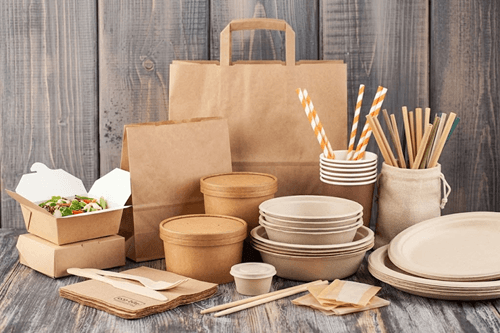
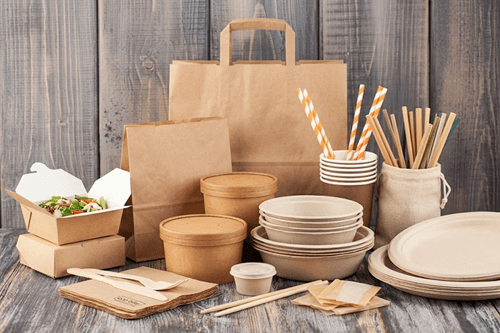
Water-based coated paperboard can be used for a wide range of food and beverage packaging applications.
For hot beverage cups, the coating needs to provide liquid resistance and maintain its properties when exposed to hot drinks.
For cold beverage cups, moisture resistance is particularly important because condensation can weaken untreated paperboard.
The technology can also be used in takeaway food containers, snack packaging, food trays, and other fiber-based packaging where water or grease resistance is required.
How to Choose the Right Coating?
The best coating depends on the final application. Manufacturers should consider beverage temperature, water resistance, grease resistance, heat-sealing requirements, printing compatibility, coating weight, drying conditions, food-contact requirements, and end-of-life considerations.
For example, a coating for a hot coffee cup may require stronger heat resistance, while a coating for a cold drink cup may place greater emphasis on moisture and condensation resistance.
Conclusion
A water-based coating for paper cups provides an effective way to improve the liquid resistance and functional performance of paper-based packaging. By combining water-based polymer technology with suitable additives and controlled coating processes, manufacturers can develop coatings for hot drinks, cold beverages, food packaging, and other applications.
The right formulation should balance barrier performance, production requirements, printing and converting compatibility, food-contact regulations, and recycling considerations. As demand for fiber-based packaging continues to grow, water-based barrier coating technology is becoming an increasingly important solution for modern paper cup manufacturing.