When Shouldn'T You Use Parchment Paper?
parchment paper is useful for baking, roasting, and preparing foods because it provides a convenient non-stick surface and can reduce cleanup. However, it is not suitable for every cooking method or packaging application. You should not use parchment paper above its specified temperature limit, over an open flame, under a broiler unless the manufacturer explicitly permits it, or in situations where the paper could contact heating elements.
It is also important to distinguish parchment paper from Greaseproof Paper. Although both materials are used around food, they do not necessarily offer the same heat resistance, release properties, or moisture performance. Selecting the right paper for each application helps improve food safety, prevent scorching, and reduce unnecessary material waste.
What Is Parchment Paper Designed For?
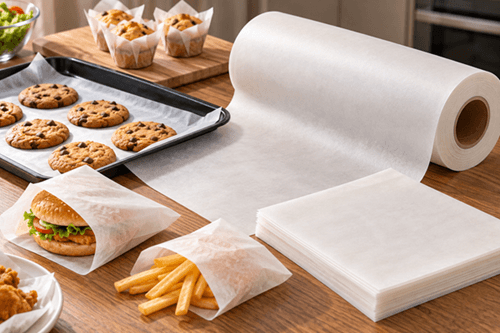
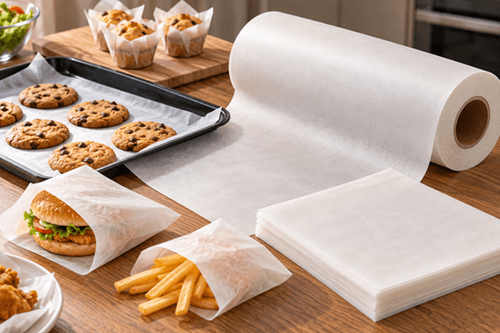
Parchment paper is commonly used to line baking trays, cake pans, and oven-safe cooking surfaces. Depending on the product, it is manufactured or treated to provide a non-stick surface and withstand specified oven temperatures.
Its main purpose is to prevent foods from adhering to cookware and make food removal easier. It can be useful for baking cookies, roasting vegetables, preparing pastries, and cooking other foods under suitable oven conditions.
However, parchment paper is not a universal heat barrier. Its performance depends on the manufacturer's temperature rating, the oven configuration, the length of exposure, and direct contact with heat sources.
When Shouldn't You Use Parchment Paper?
1. Above the Manufacturer's Temperature Limit
You should not use parchment paper at temperatures higher than its specified maximum. Excessive heat can cause the paper to darken, become brittle, smoke, or ignite under unfavorable conditions.
Many baking parchment products have a stated temperature limit, but the exact rating varies by brand and construction. Always check the packaging or technical documentation before using the paper in a high-temperature oven.
If a recipe requires temperatures outside the product's approved range, choose a suitable alternative, such as an oven-safe baking surface or cookware rated for the intended conditions.
2. Under a Broiler or Close to a Heating Element
Parchment paper is generally unsuitable for direct exposure to a broiler or intense radiant heat unless the manufacturer specifically approves that use. Broilers can produce localized temperatures and direct heat that exceed the paper's normal baking conditions.
Paper extending beyond a baking tray may also approach a heating element or flame. Trim the paper to fit the tray and follow the appliance and paper manufacturer's instructions.
3. Over an Open Flame
Parchment paper should not be placed directly over an open flame, on a barbecue grate above burning fuel, or against a gas burner. The paper is combustible, and direct flame exposure can cause it to ignite rapidly.
For grilling or cooking directly over a flame, use cookware or accessories specifically designed for that environment. Do not assume that a product suitable for oven baking is also suitable for open-flame cooking.
4. When the Paper Could Touch the Oven Walls or Heating Elements
Large or loosely fitted sheets can curl, shift, or extend beyond the baking tray. If the paper contacts a heating element or another extremely hot surface, it may scorch or ignite.
Use the correct sheet size, keep the paper secured beneath the food when appropriate, and make sure no loose edges can reach a heat source. Avoid using parchment paper in appliances where the airflow or heating arrangement could lift it toward an element.
5. In an Air Fryer Without Proper Weight or Placement
Parchment paper can be used in some air fryers when the manufacturer permits it and the paper is designed for the operating temperature. However, loose parchment paper may be lifted by the circulating air and pushed into a heating element.
Never preheat an air fryer with loose parchment paper inside unless the appliance instructions specifically allow the method. Use an appropriately sized product and keep it secured beneath food, following the manufacturer's guidance.
For perforated parchment liners, ensure the design is compatible with the appliance and does not interfere with airflow or safe operation.
6. When a Food Requires a Strong Non-Stick Surface but the Paper Is Not Suitable
Not all paper products offer the same release properties. Some foods, particularly sticky mixtures or delicate baked products, may adhere to a paper that lacks a suitable non-stick surface.
greaseproof paper is designed primarily to resist oil penetration, whereas baking parchment is commonly selected for its non-stick performance and specified heat resistance. A grease-resistant surface does not automatically provide the same release characteristics as parchment paper.
For recipes that require easy release, choose a product specifically designed for baking and follow the recommended preparation method.
7. When Used for Long-Term Food Storage Without Confirming Suitability
Parchment paper may be useful for separating foods or wrapping certain items, but it should not automatically be treated as a complete moisture, oxygen, or grease barrier for long-term storage.
Foods with high moisture or fat content may require packaging designed to provide stronger protection against leakage, contamination, or environmental exposure. The appropriate choice depends on the food, storage temperature, storage duration, and applicable food-contact requirements.
For oily foods, greaseproof paper may be a suitable option if the product has the required grease resistance. For products requiring moisture protection or an airtight seal, a more suitable packaging structure may be necessary.
Can You Use Greaseproof Paper Instead of Parchment Paper?
Sometimes, but the two materials should not be treated as universally interchangeable. Greaseproof paper is intended to resist the penetration of oils and fats, while parchment paper is commonly designed for baking applications that require non-stick performance and heat resistance.
Greaseproof paper may be suitable for wrapping sandwiches, lining food packaging, separating fatty food portions, or other applications specified by the supplier. However, it should only be used in an oven if the product documentation confirms that it is suitable for the required temperature and cooking conditions.
When choosing paper for a commercial kitchen or food manufacturing operation, check the product's temperature rating, surface properties, and intended use. A paper that performs well for cold food wrapping may not be suitable for high-temperature baking.
How Does Greaseproof Paper Differ From Baking Parchment?
| Feature | Greaseproof Paper | Parchment Paper |
|---|---|---|
| Primary function | Resists grease penetration | Provides a non-stick baking surface and specified heat resistance |
| Common uses | Food wrapping, liners, oily food packaging | Baking trays, cake pans, oven cooking |
| Heat suitability | Depends on the specific grade | Depends on the manufacturer's temperature rating |
| Non-stick performance | Not guaranteed | Commonly designed for food release |
| Moisture resistance | Varies by construction | Varies by construction |
| Commercial availability | Sheets, rolls, and printed formats | Baking sheets and rolls |
Neither material should be assumed to be waterproof or suitable for every food-contact condition. Product specifications should guide the final selection.
What Should Food Businesses Consider When Choosing Greaseproof Paper?
Restaurants, bakeries, food manufacturers, and packaging companies should evaluate the intended use before purchasing greaseproof paper. Important factors include grease resistance, paper weight, dimensions, printing requirements, food-contact compliance, and the temperature and moisture conditions expected during use.
Businesses purchasing bulk greaseproof paper should also check packaging format, roll consistency, storage requirements, and order specifications. Wholesale greaseproof paper may be available in standard sheets, rolls, or customized sizes depending on the supplier.
A greaseproof paper distributor can help identify suitable product grades for local food-service operations. A greaseproof paper exporter may provide documentation and specifications for overseas buyers, while a greaseproof paper packaging supplier can help coordinate customized formats and printing options.
For businesses using converting equipment or automated wrapping lines, a greaseproof paper roll supplier should confirm roll width, winding direction, paper thickness, and compatibility with the machinery. A food wrapping paper supplier should also clarify whether the material is designed for cold wrapping, hot-food service, or baking-related applications.
Before placing a large order, request product samples and technical documents. If the paper will contact food directly, confirm that the material meets the applicable food-contact requirements in the destination market. Environmental claims such as compostable, recyclable, or PFAS-free should also be supported by appropriate evidence.
What Are Suitable Alternatives to Parchment Paper?
The best alternative depends on the cooking method and the purpose of the paper.
Silicone baking mats: Suitable for many baking applications when used within the manufacturer's temperature limits.
Greased baking trays: Can work for some cakes, cookies, and roasted foods, depending on the recipe.
Oven-safe cookware: Useful when paper is unsuitable or when food needs direct contact with a durable cooking surface.
Greaseproof paper: Appropriate for specified food-wrapping and packaging applications, but not automatically a substitute for oven parchment.
Aluminum foil: Useful for certain roasting and covering tasks when appropriate, although it does not provide the same non-stick properties as parchment.
Always confirm that the alternative is suitable for the appliance, temperature, and food being prepared.
How Can You Use Parchment Paper More Safely?
Following a few basic precautions can reduce the risk of scorching and improve baking results.
Read the manufacturer's temperature and application instructions.
Keep parchment paper away from direct flames and heating elements.
Cut the paper to fit the tray without excessive overhang.
Do not use damaged, heavily scorched, or otherwise unsuitable paper.
Keep loose paper secured beneath food when using appliances with circulating air.
Use a product specifically designed for the intended cooking or food-contact application.
Conclusion
Parchment paper should not be used beyond its specified temperature limit, over an open flame, or in direct contact with heating elements. It may also be unsuitable for certain air fryer configurations, long-term storage applications, and tasks that require a different level of grease resistance or non-stick performance.
Greaseproof paper is an alternative for many food-wrapping and packaging tasks, but its suitability for baking depends on its material specifications and temperature rating. By understanding the differences between greaseproof paper and parchment paper, users can select the right product for safer cooking, effective food handling, and reliable packaging performance.
```